
 TICKETS
 DONATE




Costa's Hummingbird
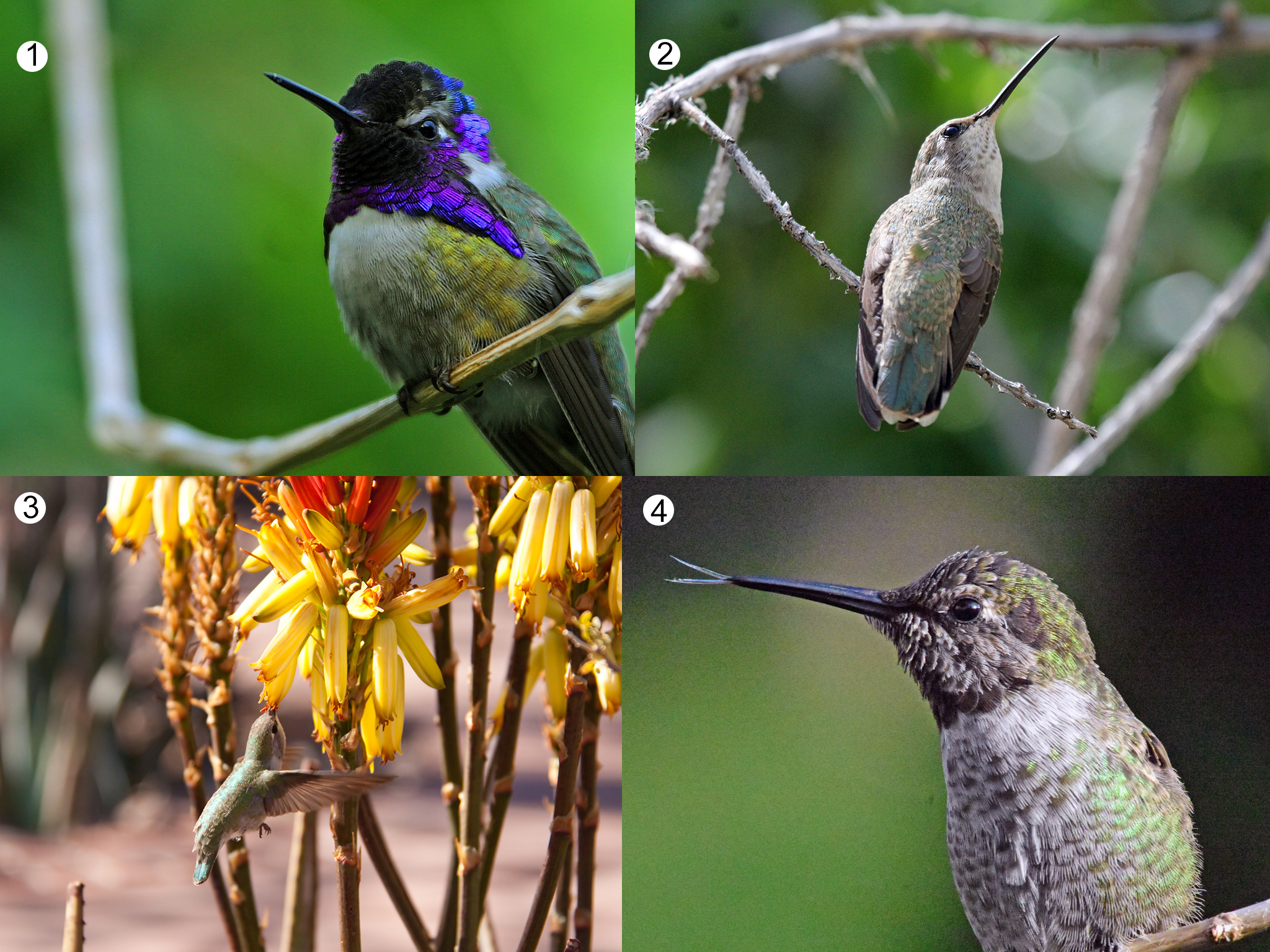
1 and 2: DickDaniels (http://theworldbirds.org) 3: Stefan Schorn, Mineralienatlas.de - Stefan Schorn
About
Photo 1: Costa’s hummingbird male sitting on a branch, with purple chin feathers brightly on display.
Photo 2: Costa’s hummingbird female sitting on a branch, with light-colored throat visible.
Photo 3: Costa’s hummingbird female hovering and sipping nectar from a tubular, yellow flower.
Photo 4: A hummingbird sitting on a branch, sticking out its forked tongue
Hummingbirds are truly magnificent tiny animals — with the most brilliant colors, the fastest wingbeats, and the most amazing ability to fly up, down, sideways, and backwards! Costa’s hummingbirds are one of 366 species of hummingbirds in the world. This “flame-throated” hummingbird has a green back and grayish-white belly. In the sunlight, the males have a shiny purple forehead and throat. In the shade or on a cloudy day, these patches may look black. Unlike the flashy males, the females do not have the purple coloration.
Adaptations
Hummingbirds are amazing flyers and are the only known bird that can fly backwards and hover! They do so by rotating their wings in a fast figure eight pattern. This is very helpful for visiting flowers by positioning themselves so their slender beak and long tongue can slurp up sugary nectar. Their tongues are forked and lined with tiny, hair-like hooks called lamellae which trap the nectar to make feeding more efficient. Pollen hitches a ride with these hummers from flower to flower, helping those plants turn flowers into fruits. They are important pollinators for many desert plants!
Hummingbirds burn energy very quickly and have to eat often to maintain their energy level. Think of it like a car. When driving, the car is always using up the gas and will have to keep filling up. Even when a hummingbird is resting, they are still using their gas tank. This makes it too risky for a hummingbird to keep their gas tank running on a cold night when they could run out of energy. Instead, hummingbirds turn off their engine by dropping their heart rate and decreasing their body temperature. They may even stop breathing for a few minutes at a time! This mini hibernation is called torpor, and it helps them conserve their energy.
Food Web
Hummingbirds spend their days hovering at flowers to sip nectar, feeding almost constantly to get the sugar necessary to maintain their fast metabolism. They can also eat flies, spiders, bees, mosquitos, and other small insects.
Predators often avoid these zippy little birds because they are so small and fast. However, roadrunners and house cats will occasionally catch hummingbirds, especially at hummingbird feeders.
Habitat and Range
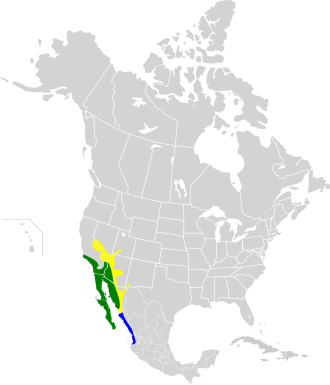
Costa’s hummingbirds live in a variety of dry and open habitats including desert scrub communities with cactus, ocotillo, chuparosa, and wolfberry. They are seen in the Tucson area mostly during breeding season (February-April) but can also be seen year-round.
Map: Cephas - Neotropical Birds Online CC BY-SA 3.0
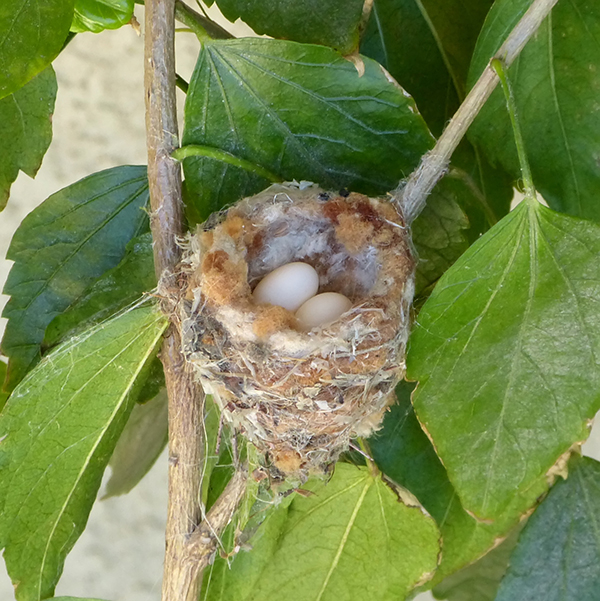
Small hummingbird nest with two tiny eggs.
Family Life
Male hummingbirds have bright colors to impress females. During breeding season, males will dive through the air at 60 miles per hour in a U-shape, with a high-pitched whistling “song” to attract females. After mating, the male takes no part in family life. The female alone builds the nest using spider webbing to hold their nests together, incubates the tiny eggs, and feeds the young. Only two bean-sized eggs are laid and incubated for about two and a half weeks. Once they hatch, baby hummingbirds are fed a mixture of nectar, spiders, and gnats. The young leave their nest in about three to four weeks.
Glossary
- Lamellae:
- On a hummingbird tongue, flexible fibers that capture fluids like nectar.
- Torpor:
- A type of daily hibernation that helps an animal save energy by slowing down their body systems.
- Conserve:
- To keep and protect from loss.
- Incubate:
- To sit on eggs and keep them warm until they hatch.
- Metabolism:
- Chemical process in the body that turns food and drinks into energy.
Fun Facts
- Hummingbirds have the fastest heart rate for a bird: up to 500 beats per minute at rest and 1260 beats per minute during activity.
- Hummingbirds have the fastest wing beats of birds: up to 80 beats per second.
- They have high body temperatures: 105° to 109°F (40.5° to 42.5°C). Great for desert life!
- Hummingbirds may eat 70 percent of their body weight per day and 4 to 8 times their body weight in water.
Conservation
Least concern (IUCN)
Challenges
Buffelgrass, an invasive plant in the Sonoran Desert, threatens Costa’s hummingbirds by taking the space and resources native plants need to grow. This means there is less food for hummingbirds. Check out Save Our Saguaros: Beat Back Buffelgrass for more information on buffelgrass.Many humans put out hummingbird feeders to help these tiny birds, but it’s important to keep feeders regularly maintained. Feeders can attract harmful insects, grow mold, and spread disease when not cleaned regularly. It is recommended to clean daily during hot weather.
Conservation Index
At The Museum
View on Map
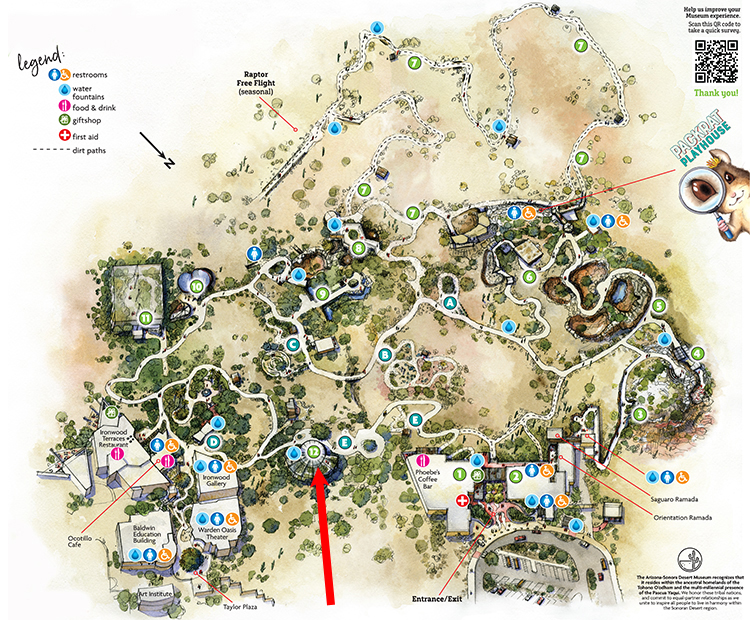
Wild hummingbird visitors often make their way through the Desert Museum grounds, so keep your eyes peeled (especially near any red, tube-shaped flowers). They are also found in the dedicated Hummingbird aviary (see map).
Schedule: open year-round.
Accessibility: rough terrain & wheelchair accessible.


