Wild Bee Ecology
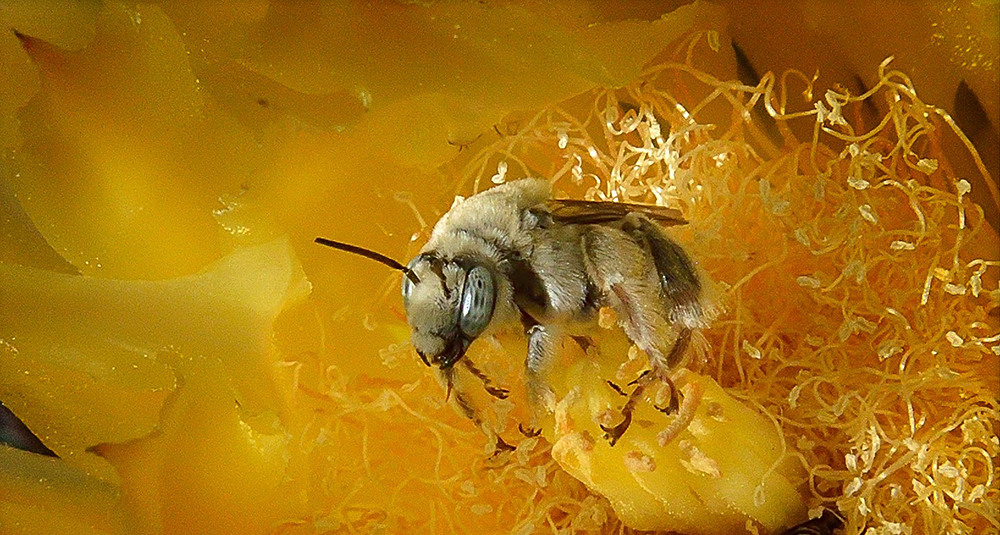
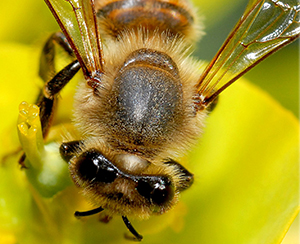
The honey bee has probably received more attention than all other bee species combined, but it is only 1 of more than 20,000 bee species worldwide. Though the domesticated honey bee pollinates many agricultural crops, wild bees are the most important pollinators of our native Sonoran Desert plants and the majority of plant species across the globe.
|
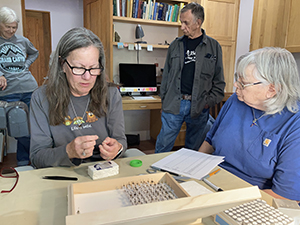
Most Sonoran Desert bees are solitary and nest in the ground. Some wild bee species build nests from pebbles or leaves, and mason bees create their own adobe mud. Many wild bees emerge from their nests only when their preferred plants are flowering, providing pollen and nectar (a.k.a. bee food). Other less picky eaters remain active throughout much of the year as long as temperatures and flower availability allow. Because wild bees are extremely varied, extensive, long-term research is needed to learn about their population dynamics and seasonal activity. From 2016–2023, Desert Museum volunteers (the “Bee Team”) used standardized methods to sample bees from four sites across the City of Tucson, resulting in one of the longest and most thorough records of Sonoran Desert bee diversity to date. |
|