Sonoran Desert Cooperative Weed Management Area
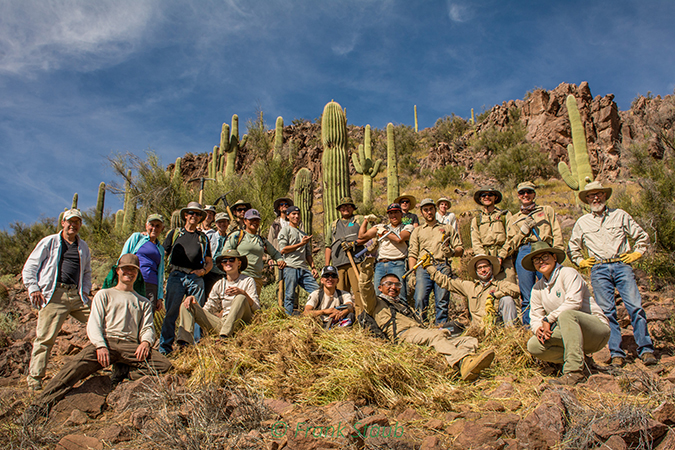
Invasive plants do not recognize property boundaries. To successfully manage these species requires public land managers, landowners, concerned communities members, and conservation organizations to share knowledge and coordinate treatment.
|
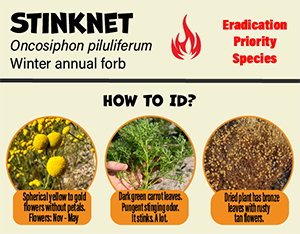
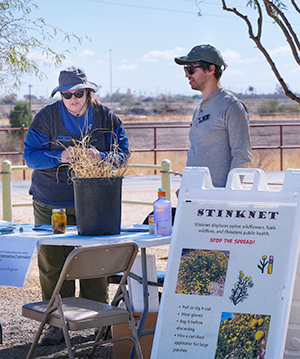
Cooperative Weed Management AreasSuccessful management of invasive species depends on coordination among many partners which often include federal, state, county, and local government agencies, Indigenous nations, interest groups, and individuals. Cooperative Weed Management Areas provide a forum for information exchange among these partners. History of the Sonoran Desert Weed Management AreaIn 2017 the Desert Museum launched the Sonoran Desert Cooperative Weed Management Area (SD-CWMA) as an independent, informal organization to facilitate cross-jurisdictional communication and collaboration in invasive species management in Pima County. The SD-CWMA is currently administered by the Desert Museum with support from Pima County Conservation Lands and Resources. Sonoran Desert Weed Management TodayThe SD-CWMA coordinates hybrid monthly meetings (in-person/remote) for regional partners. These meetings provide opportunities to share knowledge about emerging invasive species, treatment methods, and results of current efforts. Recently, we have coordinated a rapid response to a new arrival, stinknet, an invasive fuel species that has already become entrenched in Maricopa and Pinal Counties. |
|
Invasive species management is not a project with an endpoint — it is a continuing responsibility. Just as roads require regular maintenance to remain safe and functional, the Sonoran Desert requires ongoing invasive species management to remain healthy and resilient. The Sonoran Desert Cooperative Weed Management Area is committed to bringing together regional partners to sustain this work.